
Human-controlled from question to final approval
Your matter is directed by a real person who defines the question, evaluates the evidence, challenges the findings and remains accountable for the final professional judgement.
Aperture Research Works
Aperture Research Works tests whether the evidence is strong enough to carry an important decision. This page explains who remains responsible for the work, how human approval is controlled and where Aperture fits.
HOW TECHNOLOGY FITS
Aperture Research Works uses modern research tools, including artificial intelligence, where they improve discovery, comparison, extraction, analysis or efficiency. But AI output is not treated as evidence merely because a model produced it.
Material findings remain governed by the applicable Aperture standards for sourcing, verification, uncertainty, contradiction handling, professional boundaries and human review.
Technology helps us work faster. It does not remove the obligation to establish what the evidence actually supports.
A necessary distinction
Aperture does not promise absolute certainty. We test a defined material claim against the lawful evidence available within an agreed scope and time period.
The finding states what is supported, what is not established, what remains uncertain and what level of reliance is justified for the decision.
Clear professional boundaries
Aperture is not a crime laboratory, private investigation or surveillance service, statutory auditor, law firm, investment adviser, regulator, court or automated decision-maker. We do not issue licences, certificates or accreditation.
Where specialist authority is required, we say so and stop or escalate.
See the full professional boundaries →We work best where the question is important enough to justify disciplined independent verification.
Every prospective matter receives a human review for fit, lawfulness, conflicts, evidence availability, professional boundaries and capacity. If we can assist, we explain the most appropriate route and next step.
You may approach Aperture directly. No invitation or referral is required.
The controlled system behind the output
Aperture Research Works does not begin with a prompt and end with a polished document. Its current controlled operating framework extends across formal acceptance, evidence, regulatory, testing, quality, human-review, release and lifecycle controls.
The public framework explains the principles sufficiently for clients to evaluate the service. Detailed non-public methodology, workflows, templates and controls remain proprietary and confidential.
Built to move quickly
Aperture is remote-first and built around tightly defined questions, structured digital evidence workflows and technology-assisted discovery. That operating model can allow us to move quickly when a decision is time-sensitive, while people still control the evidence evaluation, challenge process and final judgement.
Actual timing depends on scope, source availability, complexity, jurisdiction, client response, specialist dependencies and settled payment. Speed never replaces verification.
Why this matters to clients
Your matter is directed by a real person who defines the question, evaluates the evidence, challenges the findings and remains accountable for the final professional judgement.
When a material issue belongs to law, engineering, medicine, accounting, digital forensics or another regulated field, that boundary is identified rather than imitated.
Technology may assist the work, but no professional conclusion is released merely because software or an AI system generated it.
Accountable leadership and controlled contribution
Aperture operates through a controlled professional system. Named leaders retain accountability, while authorised contributors and appropriately qualified specialists may support a matter where the agreed scope requires them. The practice does not publish a headcount; roles, access and professional boundaries remain controlled.

Founder, Principal Research Systems Architect & AI Systems Integration Engineer
Paul leads the design, governance and technical integration of Aperture Research Works’ research, evidence and digital operating systems.
He defines systems architecture across the website, ARI, databases, research systems, email, calendars, automation and operational workflows, including the human approval controls that separate public interfaces, private services, evidence work and final release.
Paul directs research-governance architecture, evidence standards, source controls, verification logic, adversarial review design and final quality-control frameworks. He also defines the Matter Lifecycle, Matter Action Register, Calendar Queue, written-handoff and monitoring architecture.
AI and automation support controlled workflows, but Aperture Research Works remains human-led. Paul retains final human authority over material research, system governance and release decisions.
Technical focus: systems architecture, AI systems integration, backend integration, API orchestration, workflow automation, database design, evidence systems, secure data flows, audit trails and production readiness.
View Paul on LinkedIn →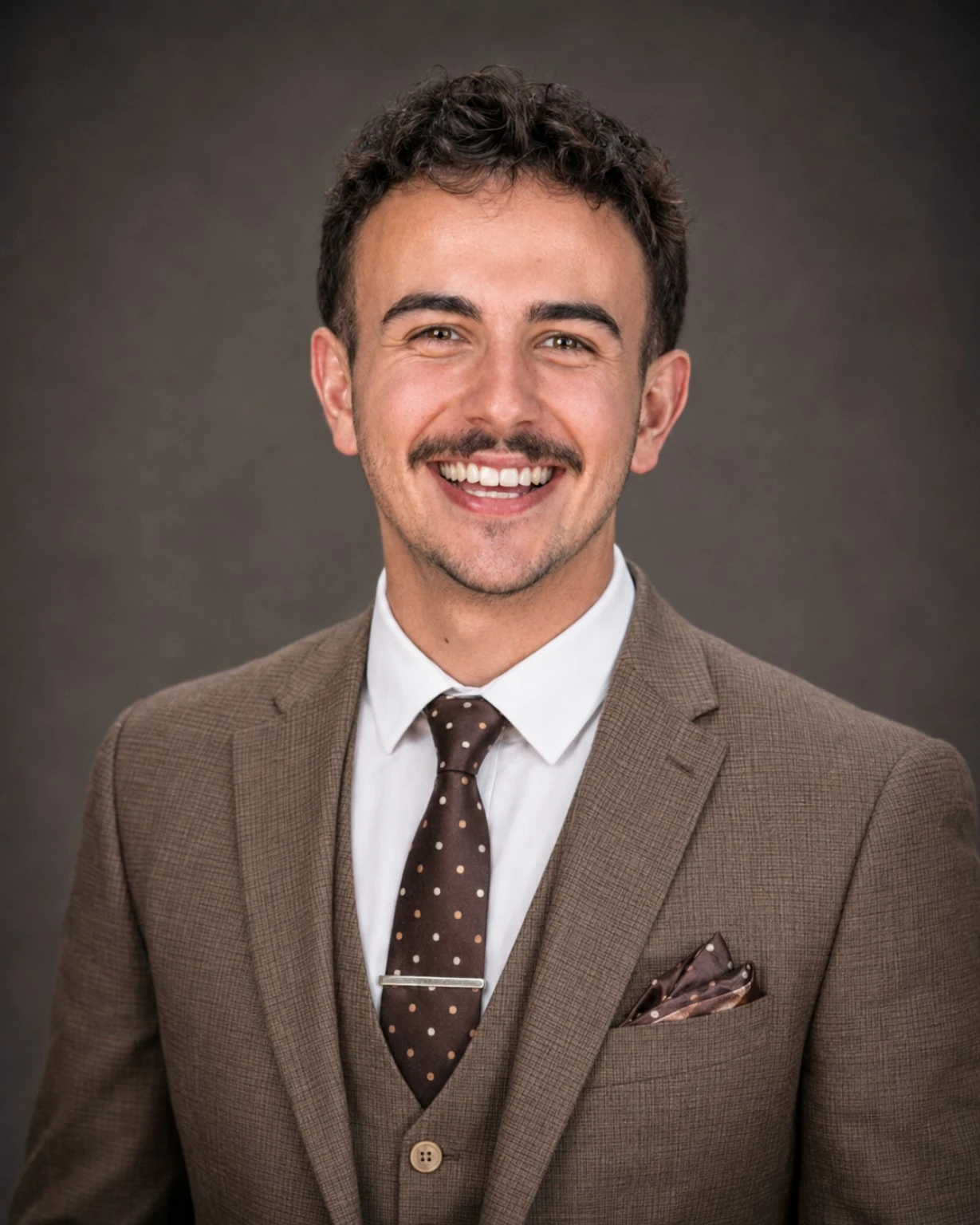
Systems Integration Engineer & Technical Operations Engineer
Xandro is responsible for implementation, technical operations and controlled execution across Aperture Research Works’ integrated digital systems.
He implements and maintains integrations between the website, ARI, databases, email, calendar services, APIs and operational workflow components, and supports Hostinger deployment, environment configuration, staging validation and production-release checks.
His operational work includes API endpoints, authentication and OAuth flows, webhooks, queues, server-side workers, database connectivity, voice and text infrastructure, logs, recovery and end-to-end testing for reliability, duplicate prevention and error handling.
Xandro executes approved technical changes without independently changing material research conclusions, commercial commitments or governance controls, and escalates material system, evidence, scope or governance decisions under the defined human-control framework.
Technical focus: backend integration, APIs, cloud integration, automation engineering, OAuth, webhooks, databases, worker queues, deployment, staging, monitoring, recovery, secure intake, ARI operations, calendar and Gmail integration.
Published framework
Paul Hattingh and Xandro Hattingh are co-creators and co-authors of the published Aperture verification framework. It describes a deterministic verification discipline for testing real-world claims against physical, logical and observable constraints before broader interpretation or probability is applied.
The framework is not presented as an artificial intelligence system. Aperture Research Works applies its governing principles through a human-controlled, human-reviewed evidence-assurance practice.
View the Published FrameworkHow this serves the client
We help turn a broad concern into the specific decision or reliance question that actually matters.
Supporting and contradictory evidence remain visible so that the assessment is not engineered around a preferred conclusion.
The final work distinguishes what the evidence supports, what remains unresolved and where another professional must decide.
Client communication
The team first gathers written information needed to understand the question, intended use, jurisdiction, available evidence and practical deadline. Xandro may provide a limited introductory human interaction if still useful after material questions are handled in writing. Aperture then determines whether the matter is suitable and what the smallest responsible scope should be.
Email remains the official channel for substantive instructions, evidence and decisions so the record stays traceable. WhatsApp is available for first contact and genuinely urgent communication, but sensitive evidence and formal instructions should follow the appropriate controlled route.
Evidence in practice
The MH370 public-source case is a direct example of Paul Hattingh’s investigative and evidence-assurance approach, including final human approval of the research edition and explicit preservation of unresolved specialist questions.
Human-controlled, publicly documented foundations
Aperture Research Works does not deliver unreviewed machine-generated research. Human judgement defines the question, examines evidence, challenges findings and controls final approval. Technology can assist discovery, comparison and analysis; the tool is never the evidence.
Aperture Research Works developed from a formally documented evidence-assurance and investigative research framework. A public technical description is preserved on Zenodo under DOI 10.5281/zenodo.18173113. The DOI provides a persistent public record; it is not accreditation, certification or endorsement by Zenodo, CERN or DataCite.
Professional verification
Founder, Principal Research Systems Architect & AI Systems Integration Engineer. Leads strategy, research governance, systems architecture, evidence standards and final human accountability.
The public technical description of the Aperture verification discipline is available independently on Zenodo.
Aperture does not imply legal, audit, law-enforcement, investment-advisory or other regulated professional status that it does not hold. Matter-specific specialist requirements are identified during acceptance and escalation.
Research is conducted under human control, with technology used to support evidence discovery, organisation and analysis. Final evaluation and conclusions remain human responsibilities.
Method protection
Aperture publishes the service logic, professional boundaries and enough evidence context for clients to assess the work. Detailed non-public methodology, workflows, templates and controls remain proprietary and confidential.
The work is not designed to manufacture a predetermined answer.
Material findings must be traceable to identifiable evidence.
Technology assists the process, but final professional judgement remains human.
We define what the work answers and what it does not.
Unresolved gaps are disclosed rather than hidden.
The purpose is responsible reliance, not information accumulation.
RESEARCH RECORD & PROPRIETARY SYSTEM
The foundational research framework is preserved at DOI 10.5281/zenodo.18173113. The DOI is a public research record, not an accreditation, certification or disclosure of Aperture's protected internal operating mechanics.
Aperture's detailed non-public methodology, workflows and protected know-how remain proprietary and commercially sensitive.
People and public record
Roles, human approval, public case work and the persistent research record are available for inspection. Aperture does not claim an undefined institutional scale or credentials it cannot support.